

Patient Guide to Asthma Diagnostic & Respiratory Testing
Still experiencing cough, wheezing, or shortness of breath despite using an inhaler or having normal breathing tests? Understand your testing options and what to expect.
Patient Guide to Asthma Diagnostic & Respiratory Testing
Still experiencing cough, wheezing, or shortness of breath despite using an inhaler or having normal breathing tests? Understand your testing options and what to expect.
What is FeNo?
A quick, simple breath test that measures airway inflammation often associated with asthma. Below we provide more details about how FeNO Tests measure inflammation.
What is a Methacholine Challenge test?
A Methacholine Challenge test is a specialized breathing test used to evaluate airway sensitivity when routine tests appear normal.
What shoud I expect?
An overview of how to prepare, what happens during your diagnostic & respiratory testing appointment, and getting your results.
Recognizing Unexplained Symptoms
Why Do I Still Have Symptoms If My Spirometry Test Is Normal?
Asthma-like symptoms can be frustrating, especially when they come and go or are triggered by exercise, allergies, cold air, smoke, or respiratory infections. You may feel worse at certain times, but your lungs may sound clear during a routine office visit.
Common Symptoms to Discuss With Your Doctor:
Persistent coughing (especially at night or after exercise)
Wheezing or shortness of breath
Chest tightness
Triggers from cold air, exercise, strong odors, or respiratory infections
Intermittent symptoms that are hard to capture during a routine clinic visit
Choosing the Right Test: FeNO vs. Methacholine Challenge
| Feature | FeNO Testing (Airway Inflammation) | Methacholine Challenge (Airway Sensitivity) |
|---|---|---|
| Primary focus | Measures fractional exhaled nitric oxide (airway inflammation). | Evaluates airway hyperresponsiveness (airway sensitivity). |
| Ideal when | You want to know if airway inflammation is contributing to your breathing symptoms. | You're still having asthma-like symptoms even though routine breathing tests look normal. |
| Procedure | A single, non-invasive breath into a handheld device. | Breathing in controlled, gradually increasing doses of methacholine under medical supervision. |
| Duration | Takes only a few minutes. | Completed in a clinical setting under direct supervision. |
FeNO Testing: Evaluating Airway Inflammation for Unexplained Symptoms
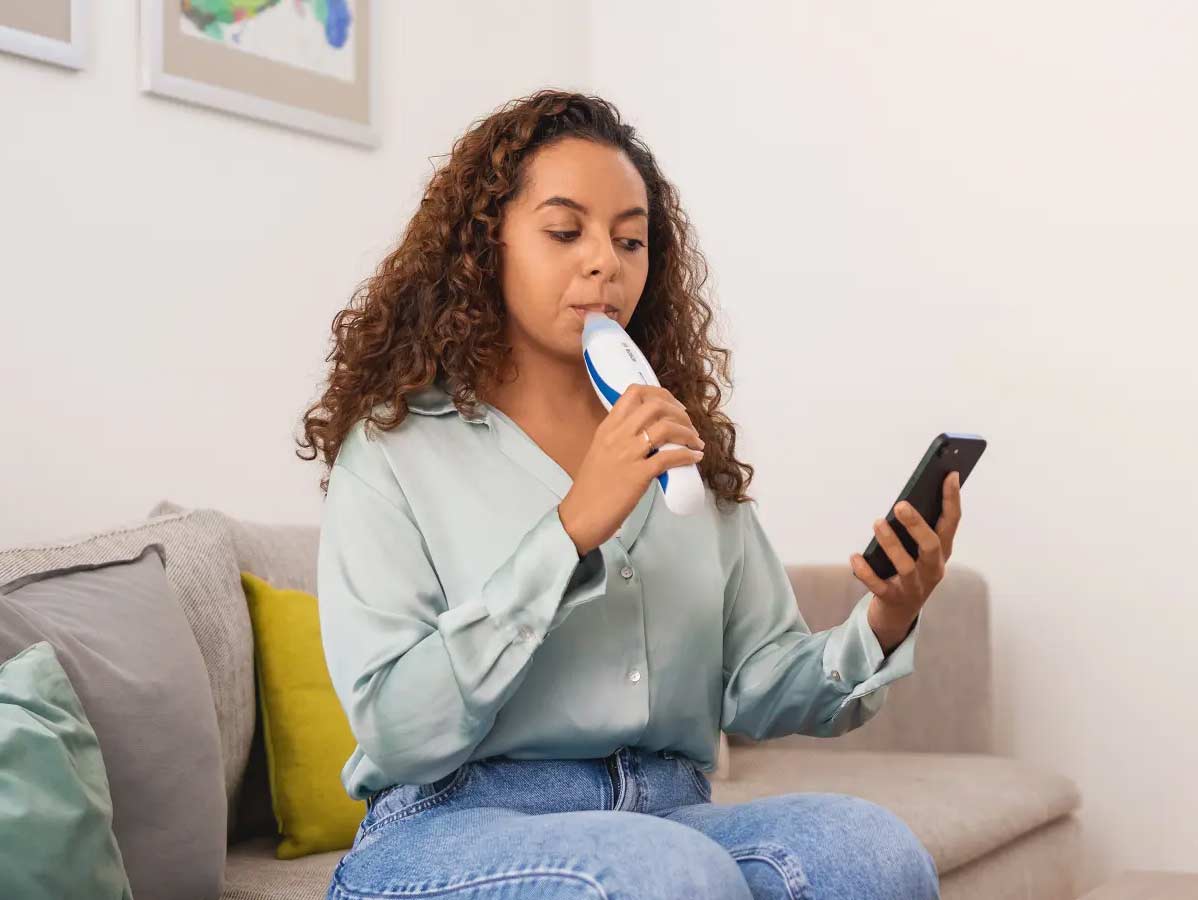
What FeNo Testing Measures
FeNO testing measures fractional exhaled nitric oxide in your breath. Higher levels suggest airway inflammation, which is commonly associated with certain types of asthma. This helps your provider determine whether inflammation-targeting treatments (like inhaled corticosteroids) are right for you.
Why Patients Ask About FeNO Testing:
Helps identify underlying airway inflammation
Supports asthma evaluation and treatment decisions
Is quick, non-invasive, and performed with a single breath into a device like Vivatmo® Pro
Asthma-Like Symptoms, But Normal Breathing Tests?
Why Normal Spirometry May Not Rule Out Asthma
Some people with asthma have normal spirometry results when they are not actively experiencing symptoms. A Methacholine Challenge Test helps your provider see how sensitive your airways are. During the test, you breathe in small, controlled amounts of methacholine while your breathing is measured under direct medical supervision.
Who May Benefit From Methacholine Challenge Testing:
You have asthma-like symptoms but have not received a clear diagnosis
Your spirometry results were normal, but symptoms continue
Your symptoms occur with exercise or specific triggers
You need objective confirmation before starting or changing treatments
Questions to Ask Your Provider:
Could asthma still be possible if my spirometry was normal?
Would a Methacholine Challenge Test help clarify my diagnosis?
Safety and Reassurance
Your healthcare team will review your health history before the test to make sure it is appropriate for you.

Still wondering if it’s asthma?
Ask about objective testing with a methacholine challenge test.
What should I expect from testing?
Respiratory tests are designed to help your healthcare provider understand how your lungs are functioning. They are usually quick, simple, and performed in a clinical setting.
FeNO Testing
Before
- Minimal preparation required
- Your provider will explain the procedure
During
- You breathe into a handheld device
- Takes only a few minutes
- Non-invasive breath test
After
- Results reviewed immediately by clinician
- Helps guide asthma management decisions
Methacholine Challenge Test
Before
- You may need to avoid certain medications
- Your clinician will provide instructions
During
- You perform repeated breathing tests
- You may inhale a controlled medication
- Test is done under supervision
After
- Results are reviewed after testing is complete
- Used to assess airway responsiveness
Understanding your results
All test results are interpreted by your healthcare provider, who will explain what they mean for your diagnosis and care plan.
Frequently Asked Questions
Is FeNO testing painful?
No, it is a simple breath test and completely non-invasive.
What device is used for FeNO testing?
FeNO testing is performed using clinical devices designed to measure airway inflammation. In many healthcare settings, this includes systems such as Vivatmo® Pro.
What is a Methacholine Challenge Test used for?
It helps assess airway hyperresponsiveness and supports asthma diagnosis.
Are these tests safe?
Yes, they are routinely performed in clinical environments under supervision.
Do I need to prepare for testing?
Your healthcare provider will give instructions if any preparation is needed.
How long do results take?
Some results are immediate; others are reviewed by your healthcare provider.
Need more information?
References
- Global Initiative for Asthma (GINA). Global Strategy for Asthma Management and Prevention. 2025 update. Available from: www.ginasthma.org.
- Lommatzsch M, et al. Eosinophils in asthma phenotypes: perpetrators or guilty by association? Lancet Respir Med. 2025;13(1):78–91.
- McDowell PJ, Heaney LG. Different endotypes and phenotypes drive the heterogeneity in severe asthma. Allergy. 2020;75(2):302–310.
- Coates AL, Wanger J, Cockcroft DW, et al. ERS technical standard on bronchial challenge testing: general considerations and performance of methacholine challenge tests. Eur Respir J. 2017;49(5):1601526.